
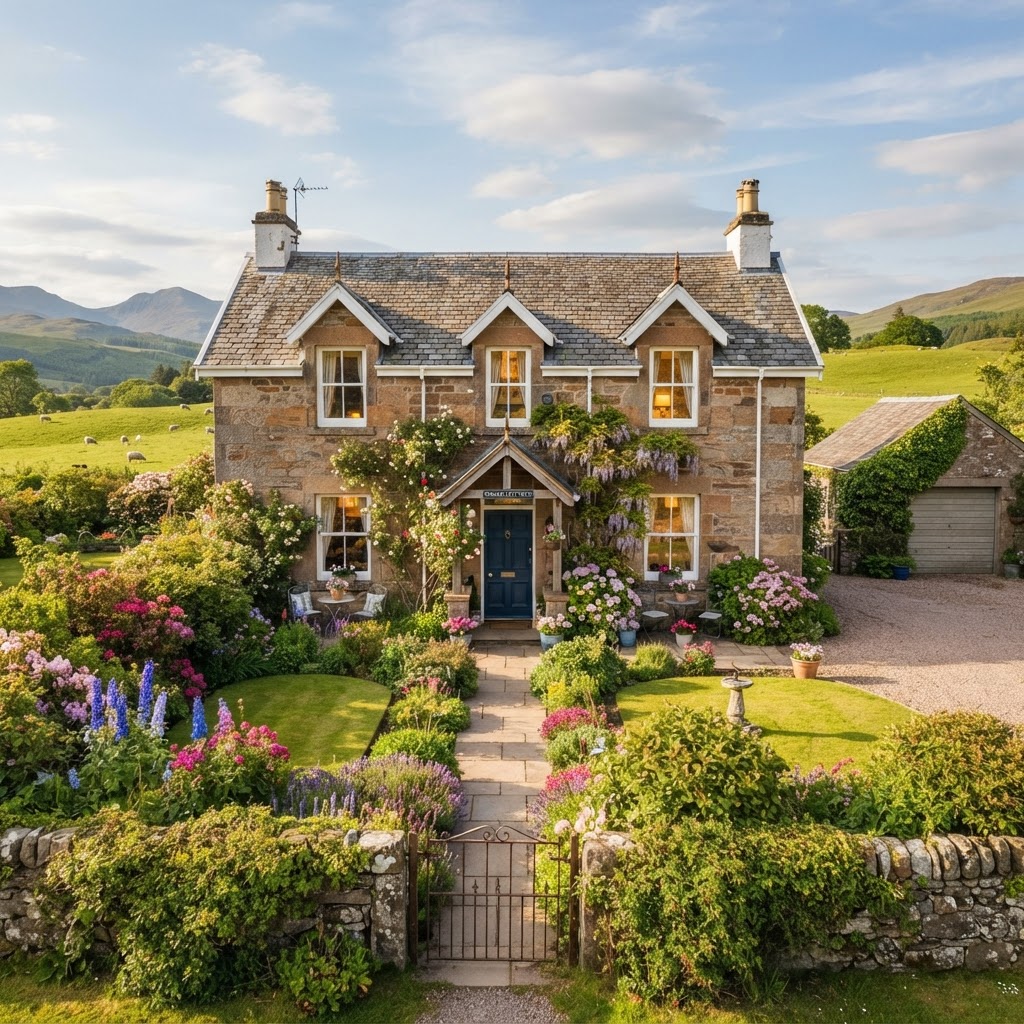
Buying a Holiday Let in Scotland: What You Need to Know
Buying a Holiday Let in Scotland: What You Need to Know
Scotland is one of Europe's most sought-after holiday destinations, attracting over 15 million visitors a year. For property investors, a holiday let can offer both rental income and a personal retreat — but the regulatory landscape has shifted significantly in recent years, and success depends on choosing the right property, location, and operating model.
This guide covers everything you need to know about buying and running a holiday let in Scotland in 2026, from licensing requirements to income projections.
Why Invest in a Scottish Holiday Let?
Strong tourism demand
Scotland's tourism sector is worth over £4 billion annually. Key drivers include:
- Edinburgh and Glasgow — year-round city tourism with festivals, culture, and business travel
- The Highlands — spectacular scenery, outdoor activities, and the North Coast 500 driving route
- Islands — Skye, Orkney, Shetland, and the Hebrides for remote getaways
- Loch Lomond and the Trossachs — Scotland's first national park, within easy reach of the central belt
- Cairngorms National Park — skiing in winter, hiking and cycling in summer
Income potential
A well-located holiday let can generate significantly more income than a long-term rental — often 2-3 times more — because nightly rates are higher and you can charge premium prices during peak seasons.
However, income is seasonal and variable. Occupancy rates typically range from 30% (poorly managed or off-the-beaten-track) to 65%+ (prime location, professional management, year-round appeal).
Step 1: Understanding Holiday Let Licensing in Scotland
The Scottish licensing scheme
As of October 2023, all short-term let operators in Scotland must hold a short-term let licence issued by their local authority. This is a mandatory licensing scheme — operating without a licence is a criminal offence punishable by fines up to £2,500.
What you need to do
-
Check the local authority's policy. Each council sets its own licensing requirements. Some (like Edinburgh) operate in designated "control areas" with stricter rules.
-
Apply for a licence before operating. Most councils process applications within 9-12 months.
-
Meet safety standards. Licences require compliance with gas safety certificates, electrical safety inspections, fire safety risk assessments, smoke and carbon monoxide alarms, and PAT testing.
-
Pay the licence fee. Fees vary by council, typically £200-£700 per year.
Planning permission
In some areas — particularly Edinburgh's control zone and parts of the Highlands where over-tourism is a concern — you may need planning permission to use a property as a short-term let.
Step 2: Finding the Right Property
Location factors
- Proximity to attractions: National parks, lochs, historic sites, coastal areas
- Accessibility: How far from airports, train stations, and major roads?
- Local amenities: Pubs, restaurants, shops within walking or short driving distance
- Broadband speed: Essential for remote workers and digital nomads
- Parking: On-site or nearby parking is a major selling point in rural areas
- Views and outdoor space: Sea views, loch views, or private gardens command premium rates
Property types
| Type | Typical price | Appeal | Notes | |---|---|---|---| | Traditional stone cottage | £150K – £400K | High — authentic Scottish charm | May need modernisation | | Modern lodge/cabin | £200K – £500K | High — popular with families | Often in holiday parks | | Victorian tenement flat | £150K – £350K | Medium — city breaks | Good for Edinburgh/Glasgow | | Farmhouse with land | £300K – £800K+ | Niche — rural retreats | Higher maintenance costs | | Converted steading/barn | £250K – £600K | High — unique character | May have conversion warranty |
Key features guests look for
- Wood-burning stove or open fire (top request in Scotland)
- WiFi with minimum 30 Mbps download speed
- Well-equipped kitchen (dishwasher, microwave, coffee machine)
- Comfortable beds with quality linen
- Pet-friendly accommodation (huge demand — 40-50% premium in some areas)
- Hot tub (can increase nightly rate by 15-30%)
- Off-street parking
Step 3: Financing Your Holiday Let
Holiday let mortgages
Unlike a standard residential mortgage or buy-to-let, holiday let mortgages are assessed differently:
- Deposit: Typically 25-30% of the purchase price
- Interest rates: Usually 0.5-1.5% higher than residential mortgages
- Income assessment: Lenders look at projected rental income, requiring it to cover 125-145% of the mortgage payment
- Personal use: Most lenders allow 30-90 days of personal use per year
Specialist holiday let mortgage lenders include Aldermore, Kent Reliance, Leeds Building Society, and Cumberland Building Society.
Cash purchase advantages
If you can buy without a mortgage, you'll have faster purchase, lower transaction costs, higher net income, and greater flexibility.
Step 4: Projecting Your Income
Example: A 3-bedroom cottage in Aviemore
| Season | Nightly rate | Occupancy | Nights | Revenue | |---|---|---|---|---| | Peak (Jun-Aug, Dec) | £220 | 85% | 77 | £16,940 | | Shoulder (Apr-May, Sep-Oct) | £160 | 60% | 73 | £7,008 | | Off-peak (Nov-Mar, excl Dec) | £120 | 35% | 60 | £2,520 | | Total annual revenue | | | 210 | £26,468 |
Operating costs
| Cost | Annual estimate | |---|---| | Cleaning (between guests) | £3,000 – £5,000 | | Laundry and linen | £1,500 – £2,500 | | Utilities (gas, electric, water) | £2,000 – £3,500 | | Broadband and TV | £500 | | Insurance (holiday let specific) | £600 – £1,200 | | Maintenance and repairs | £1,000 – £3,000 | | Platform fees (Airbnb, Booking.com) | 3-15% of revenue | | Management fee (if using an agency) | 15-25% of revenue | | Short-term let licence | £200 – £700 | | Marketing | £500 – £1,000 |
Net income (self-managed): approximately £12,000 – £18,000 per year Net income (agency-managed): approximately £8,000 – £13,000 per year
Step 5: Tax Considerations
Income tax
Rental income from a holiday let is taxed as standard rental income under Scottish income tax bands (see our Scottish Property Taxes Explained guide for full band details).
Mortgage interest relief
Since the abolition of the Furnished Holiday Letting tax regime in April 2025, mortgage interest is no longer fully deductible for higher-rate taxpayers. Instead, a 20% tax credit applies — mirroring the standard buy-to-let system.
Capital Gains Tax
When you sell the holiday let, you'll pay Capital Gains Tax on any profit. The annual exempt amount for 2026 is £3,000, with rates of 18% (basic rate) or 24% (higher rate).
Business rates vs. council tax
- Council tax applies if the property is used as a second home or let for fewer than 140 days per year
- Business rates apply if the property is available for let for 140+ days and actually let for 70+ days per year
Qualifying for business rates can be advantageous — the Small Business Bonus Scheme can provide up to 100% relief.
Step 6: Marketing and Managing Your Holiday Let
Listing platforms
- Airbnb — the dominant platform, especially for international visitors
- Booking.com — strong for European travellers and last-minute bookings
- Vrbo (HomeAway) — popular for family bookings and longer stays
- Your own website — direct bookings avoid platform fees (3-15% per booking)
- Stay4Stays (stay4stays.com) — worldwide holiday accommodation platform
Professional photography
Invest in professional photography — it's the single biggest factor in booking conversion. Ensure photos are shot in natural light, taken in every season if possible, show outdoor space and local views, and include a floor plan.
Pricing strategy
- Dynamic pricing: Use tools like PriceLabs or Beyond to adjust rates based on demand
- Minimum stays: Set 2-3 night minimums in shoulder season, 7-night minimums in peak summer
- Weekend premium: Most guests want Friday/Saturday nights — charge accordingly
- Early bird discounts: Offer 10-15% for bookings made 3+ months in advance
Self-management vs. agency
| Factor | Self-managed | Agency-managed | |---|---|---| | Fee | £0 (your time) | 15-25% of revenue | | Guest communication | You handle 24/7 | Agency handles | | Cleaning/linen | You arrange | Agency arranges | | Pricing optimisation | You manage | Agency handles | | Break-even occupancy | ~30% | ~45% (to cover fees) |
Practical Tips for Success
-
Visit the area in winter. Properties that are delightful in July can be inaccessible in January.
-
Invest in quality. Guests will pay more for high-quality linen, comfortable mattresses, and well-equipped kitchens.
-
Get pet-friendly accreditation. Pet-friendly lets command 20-40% higher rates and have significantly higher occupancy.
-
Build a direct booking website. Reduce platform dependency and keep more of your income.
-
Respond to enquiries within an hour. Platforms reward responsive hosts with higher placement in search results.
-
Collect and act on reviews. Positive reviews are the second most important booking factor after photos.
-
Budget for off-season. Have a financial buffer for months when occupancy is low — particularly January to March.
Further Reading
- Scottish Government — Short-term lets licensing
- VisitScotland — Tourism statistics
- ASSC — Association of Self-Caterers Scotland
This guide is for general information only and does not constitute financial, legal, or tax advice. Always consult qualified professionals before making investment decisions.